



The Importance of Physical Activity for Kids
Helping Your Children Have Healthier Bodies and Healthier Minds
Mounting scientific evidence indicates that children need to be physically active every day. Engaging children in routine, age-appropriate physical activities has been shown to increase their overall long-term health and cognitive development. Parents who participate in teaching their children safe, fun and stimulating physical games and exercises also help their children form good habits that can help them enjoy entire lifetimes of health and happiness.
Obesity now ranks as the No. 1 health problem among today’s school aged children. The tragedy of childhood obesity can lead to many early-onset health problems that include type 2 diabetes, high blood pressure and other serious medical conditions. The ready availability of high caloric junk food and lack of regular physical activity is a major contributing factor. Statistics show that almost one in every three children in the United States is overweight or obese. This is almost triple the number who were obese in 1963.
The best way to help stamp out obesity in children is to help children form good exercise habits.
From the time a child enters preschool, and until his or her high school graduation, parents are wise to keep prudent watch on the levels of physical activity in which their children are engaged. Fun games and other activities that encourage physical movement should be encouraged over sedentary activities such as television watching and video game playing.
The American Heart Association recommends that children ages 2 and over can benefit from at least one hour’s moderate intensity physical movement each day. It is important, however, to make sure the activity is appropriate for each child’s stage of development. If it is not possible for a child to have one continuous hour of physical activity, the AHA recommends that the exercise sessions be broken into two separate, half hour segments, or even four, more vigorous 15 minute segments.
Research shows that parents who act as role models by being physically active on a regular basis themselves, achieve the highest levels of success in instilling enthusiasm for physical activity in their children. To maximize a child’s positive attitude about physical activity, parents should strive to make physical activities fun. Finding resources and suggestions about age appropriate physical activities for children can be a challenge. However, the parent who takes the time and makes the effort to do this can help his or her children immensely.
Activity that includes physical movement helps children learn emotional and social skills as well. For example, being active physically can help children develop better attention spans. Providing physical outlets for their feelings enables children to have higher senses of self-esteem and self-confidence. Among the many benefits is their learning to cope with negative emotions in more constructive ways.
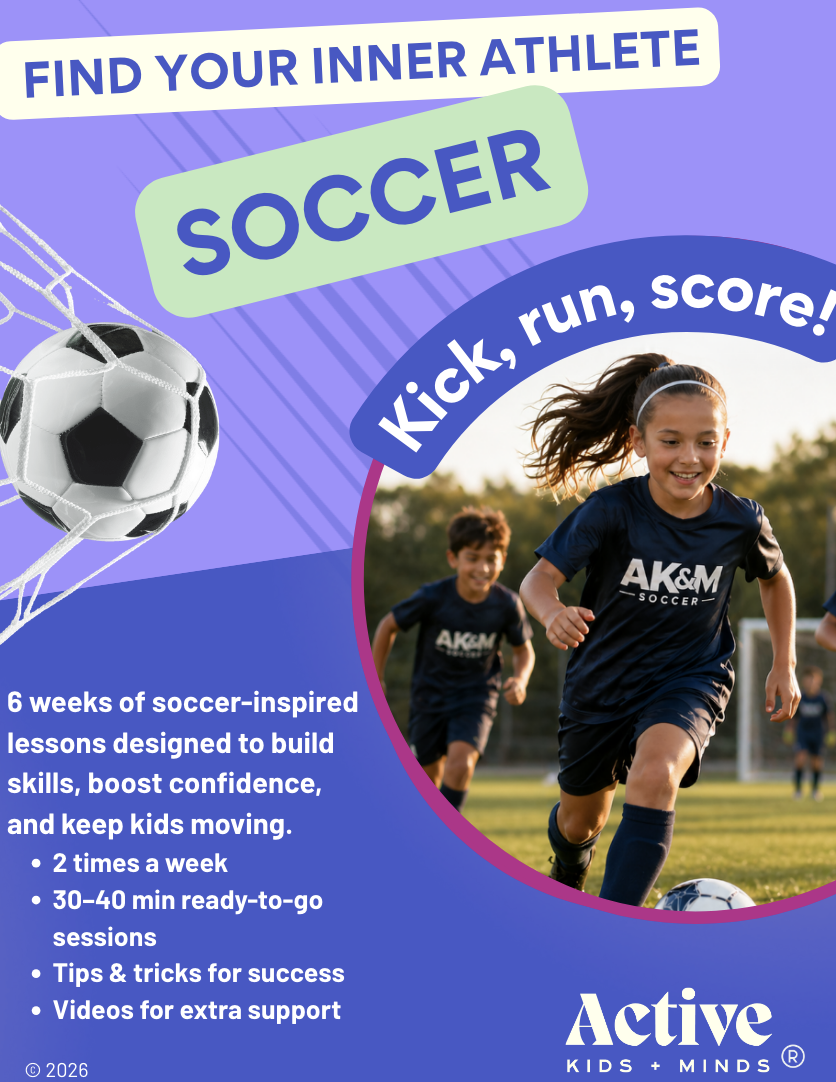
If one’s child shows an interest for in being involved in sports teams such as baseball, basketball or soccer, these activities can be excellent ways of teaching them to cooperate with others, to practice good sportsmanship and to reach mutual team goals. Family activities such as group hiking or bowling also fall into this category. However, not all children are interested in team sports. These children should also be nurtured in ways that help them develop healthy physical habits.
There is a wide range of physical activity beyond playing on sports teams that can have a positive contribution to helping children develop emotionally and socially. Included, are activities such as running, climbing, horseback riding, archery and other one-person activities. Even playing alone on playground equipment can be greatly beneficial to the child who does not enjoy team sports. These activities can teach children to focus on goals, to challenge themselves in ways that help them to achieve these goals, and again, to cope with failure in positive ways.
Studies show that rewarding children for their physical activities can be an excellent way to motivate them to move more often. For example, the child who participates on a winning team is often rewarded with a trophy. This tends to make children to strive harder to receive future rewards.
Rewards do not have to be limited to only children who play on sports teams. Parents can use their imaginations to create activities that include rewards such as sending their children on timed treasure hunts that have small prizes at their destinations, or holding informal races or dance competitions are great ways to encourage physical activity. These things make exercise fun for children of all ages, and are less apt to cause the exercises to be viewed as unpleasant chores. Using family time together as a reward can also be effective. For example, the parent who gives a gift of his or her dedicated time for one hour, as a reward for a child’s accomplishment of a physical task, can be quite effective.